New Nordic thinking, useful everyday things
Examining where Scandinavian engineering removes daily friction, and where novelty merely adds another battery to charge.
Multi-Port GaN Desk Power Bricks with Replaceable AC Modules
The everyday task improved: Consolidating three separate laptop and phone power adapters into a single desk block that stays cool under continuous 100W load and does not require throwing away the entire unit if a regional wall plug or USB-C receptacle wears out after four years of daily plugging.
Across design studios in Stockholm, Gothenburg, and Copenhagen, power delivery has shifted from sealed plastic bricks to serviceable aluminum and bio-polyamide housings. By pairing high-efficiency gallium nitride (GaN) switching stages with screw-fastened daughterboards, a worn USB-C port can be swapped in ten minutes with a Torx T6 driver. Standby draw sits below 0.08 watts, and braided silicone cables prevent desk tangles in cold winter studios.
Explore useful innovations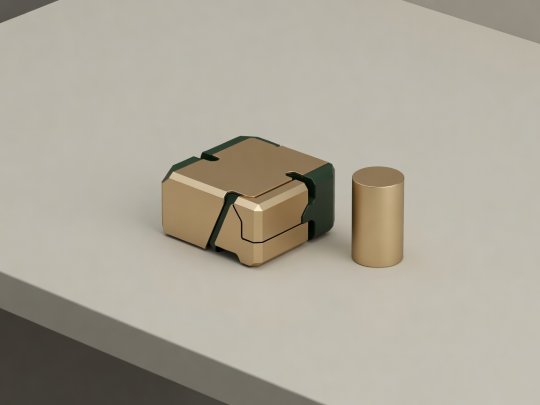
Small changes, real usefulness
We organize our hardware notes around four practical questions: how an object behaves in the hand, how it talks to a room, what it is made from, and how it is kept working ten years after purchase.
-
Everyday Devices: Less Friction
Tactile rotary controls, transflective displays readable in sleet or direct sun, and portable lamps built around standard 18650 or LiFePO4 cells rather than glued pouch batteries.
Read field notes on everyday devices -
Connected Homes, Clear Choices
District heating radiator valves, spot-price load balancers for Nordic grids, and local Thread sensors powered by Nordic Semiconductor nRF52/nRF54 silicon that run without cloud subscriptions.
Examine local home automation
-
Materials That Make Sense
Why post-industrial recycled hydro-smelted aluminum, wood-fiber biocomposites from Finnish forestry streams, and uncoated brass age gracefully while soft-touch rubber coatings turn sticky.
Review enclosure material testing -
Repair Before Replacement
Captive machine screws, published schematics, Nordic Swan Ecolabel durability benchmarks, and modular acoustic drivers that owners can service at a kitchen table.
Explore repairability standards
Inside the object — materials and repairability
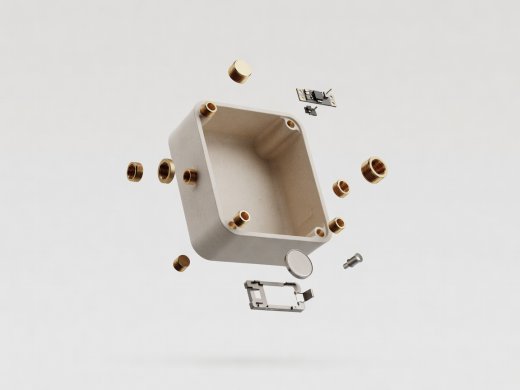
A handsome silhouette on a Copenhagen shelf means very little if the internal assembly relies on permanent cyanoacrylate glue and proprietary ribbon cables. When we inspect emerging Nordic hardware—from Teenage Engineering's precision-milled aluminum chassis in Stockholm to Bang & Olufsen's replaceable battery trays and wooden grilles in Struer—we look first at fastener geometry and component isolation.
High-wear mechanical parts always fail before solid-state silicon. USB-C ports, tactile push switches, lithium-ion cells, and elastomeric gaskets experience daily physical stress. Well-conceived Scandinavian devices place these sacrificial components on small, inexpensive sub-assemblies connected via standard JST or board-to-board headers.
-
Single-Driver Access
Enclosures secured with Torx T6 or T8 machine screws threaded into brass inserts rather than self-tapping screws into brittle ABS bosses.
-
Honest Surface Finishes
Bead-blasted aluminum, untreated birch or ash, and wool textiles from Kvadrat that can be brushed clean rather than painted plastics that flake.
Before it earns a place — evaluation criteria
Before recommending any device or component architecture, we measure how it performs against existing non-electronic or older electronic alternatives. A gadget must save time, energy, or material waste over a minimum five-year window.
| Assessment Criterion | What Useful Design Looks Like | Novelty Red Flag (Avoided) | Primary Metric |
|---|---|---|---|
| Task Friction | Immediate physical actuation via dial or toggle in under 1 second | Requires unlocking a phone and waiting for Bluetooth handshake | Seconds to complete core task |
| Parasitic Power | < 0.1W mains standby; 3–5 years on standard CR2477 or AA cells | Always-on Wi-Fi radio draining battery every 10 days | Milliwatts idle consumption |
| Local Autonomy | Operates indefinitely via Matter/Thread or physical controls offline | Bricks when a startup shuts down its remote AWS server | 100% offline core function |
| Serviceability | Standard cells, non-glued gaskets, documented part numbers | Ultrasonically welded seams and potted battery pouches | Minutes to swap cell/port |
Questions beyond the spec sheet
Spec sheets highlight peak output and wireless range, rarely mentioning winter condensation, standby draw, or five-year servicing. For a broader archive, visit our Your Tech Questions page.
Why do many Scandinavian hardware makers keep physical dials instead of touchscreens?
Capacitive touchscreens struggle when fingers are cold, damp, or gloved, and they require backlights that disturb dark rooms in winter. A detented rotary encoder or brass toggle switch provides unmistakable physical confirmation without looking at the device and consumes zero standby power while waiting for input.
Does an ultra-low-power wireless chip mean a sensor never needs maintenance?
No. Chips such as the Nordic Semiconductor nRF52840 or nRF54L15 allow sensors to sleep at microamp currents, stretching a coin cell to four or five years. However, NDIR CO2 optical chambers still accumulate household dust, and silicone O-rings on outdoor weather nodes still require inspection every couple of winters.
Are wood-fiber biocomposites as durable as petrochemical ABS in daily gadgets?
Modern wood-plastic composites and cellulose-reinforced polymers developed in Finland and Sweden match standard ABS in flexural modulus for indoor housings like speakers, chargers, and air monitors. They should not be submerged continuously in water, but they resist UV yellowing and static dust attraction better than glossy polycarbonate.
What happens to a smart radiator thermostat if my home router loses internet access?
In a properly engineered Nordic heating setup using local Zigbee or Thread schedules, the valve actuator retains its target temperature curve in onboard non-volatile memory and continues regulating hot water flow using its internal thermistor. Only remote phone adjustments and live Nord Pool spot-price updates pause until connectivity returns.
Why are lithium iron phosphate (LiFePO4) cells replacing standard lithium-ion in home backup and lamps?
While LiFePO4 cells are slightly heavier per watt-hour, they tolerate 3,000 to 4,000 charge cycles before dropping to 80% capacity—roughly four times the lifespan of standard cobalt-based cells—and offer superior thermal stability inside wooden Nordic homes.
Is USB-C Power Delivery sufficient to replace proprietary barrel jacks on workshop tools?
Up to 100W (and 240W under USB PD 3.1 Extended Power Range), USB-C readily powers soldering irons, compact bench power supplies, and cordless screwdrivers. The practical limitation is mechanical strain: workshop tools need recessed connector shrouds so a dropped cable does not snap the tongue inside the USB-C receptacle.
How does cold Nordic weather affect outdoor wireless sensors?
At −20°C, standard alkaline and lithium-ion chemistries suffer steep voltage sag due to increased internal resistance. Reliable outdoor sensors in Tromsø, Oulu, or Kiruna use lithium thionyl chloride (Li-SOCl2) or lithium iron disulfide (Li-FeS2) primary cells, or supercapacitor buffers paired with indoor power feeds.
What does the Nordic Swan Ecolabel actually verify on electronic equipment?
Beyond restricting halogenated flame retardants and heavy metals, recent criteria mandate high energy efficiency, post-consumer recycled plastic content, conflict-free mineral tracing, and guaranteed availability of spare parts and dismantling instructions for professional recyclers.
Do radon and CO2 monitors need periodic recalibration?
Yes. Photoacoustic and NDIR CO2 sensors rely on automatic baseline calibration (assuming outdoor air drops to ~420 ppm once a week when a window opens) or manual fresh-air calibration. Long-term alpha-spectrometry radon detectors self-check internal electronics but benefit from side-by-side verification every three to five years.
Follow the reasoning
Nordicgadgettrelum accepts no paid placements, affiliate commissions, or sponsored review units. Read how we benchmark devices or send us field notes on hardware you use daily.
-
How We Assess
Our teardown checklist, watt-hour metering methodology, and why we wait six months before writing about new hardware categories.
-
Your Tech Questions
Expanded technical answers covering Matter over Thread, winter battery chemistry, and EU Right to Repair directives.
-
Send an Observation
Use our structured correspondence tool to format, copy, or download hardware durability notes for our editorial desk.